Driving Guide
Why Are Automatic Driving Lessons More Expensive?
Find out why automatic driving lessons can cost more, how instructor availability and vehicle costs affect prices, and whether automatic tuition could still offer good value.
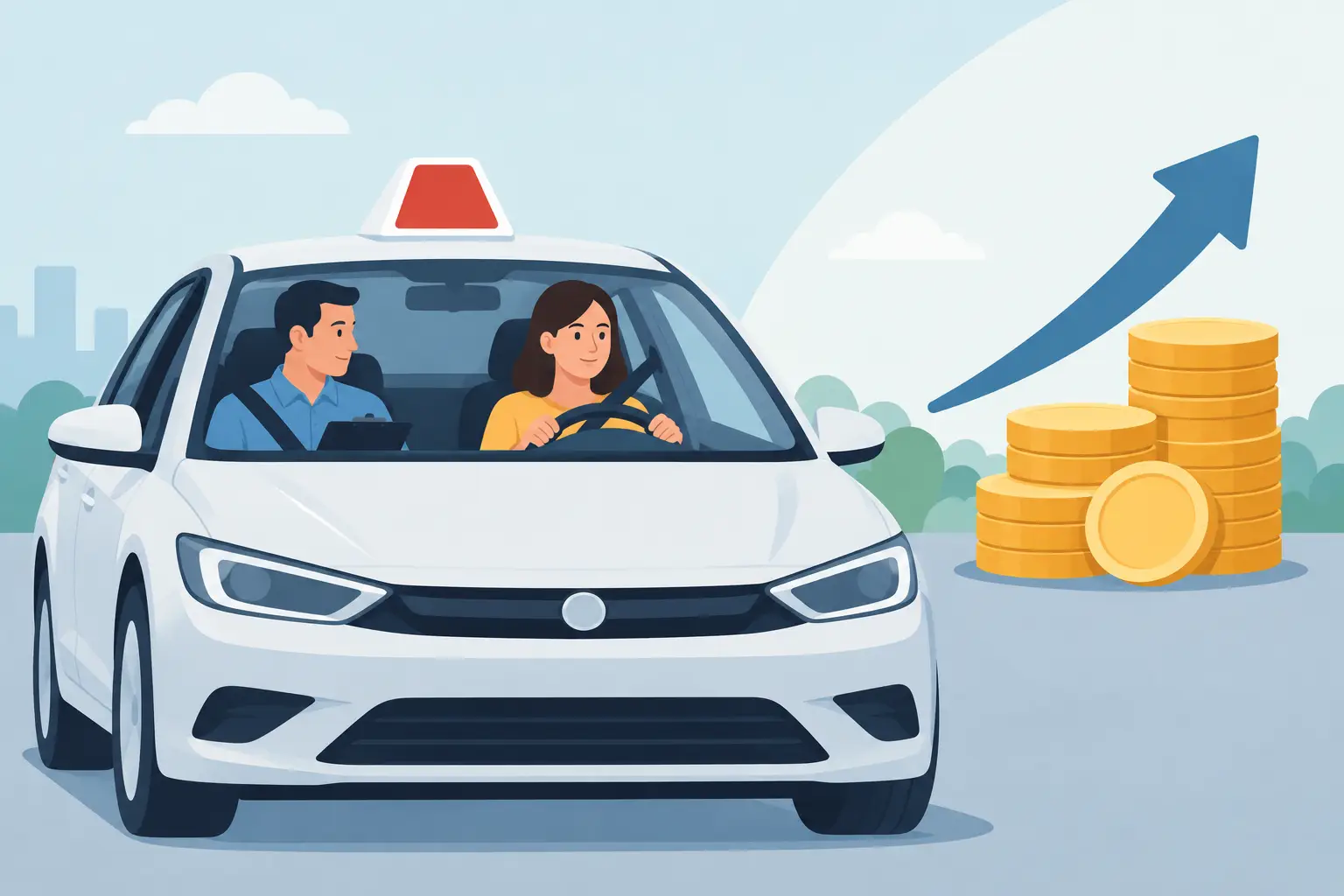
An automatic driving lesson can sometimes look noticeably more expensive than a manual lesson when you compare hourly rates. So, why are automatic driving lessons more expensive?
There is no single reason. Prices can be influenced by the instructor's vehicle and operating costs, the number of automatic instructors available locally, demand for automatic tuition and the instructor's own business costs.
For many learners in Luton, Bedford, St Albans and the surrounding areas, automatic driving can make practical sense. There is no clutch pedal to operate or manual gear changes to manage, which can allow some learners to concentrate more directly on steering, observation, planning and reading the road.
But if automatic lessons cost more in your area, it is worth understanding what may be behind the difference before deciding which option offers better value for you.
The instructor's vehicle can affect the lesson price
A driving instructor's car is their workplace. It needs to be reliable, safe and suitable for spending many hours each week teaching learners.
The cost of providing that vehicle can therefore form an important part of the lesson price.
Depending on the model an instructor chooses, an automatic car may have a different purchase or finance cost from a comparable manual vehicle. Electric and hybrid vehicles also introduce different purchase, charging, servicing and repair considerations.
The purchase price is only one part of running a tuition vehicle.
An instructor also has costs associated with appropriate driving-tuition insurance, servicing, tyres, repairs, cleaning and fuel or electricity. A tuition vehicle will generally cover substantial mileage and spend much of its working life being driven by learners with different levels of experience.
Dual controls may also need to be fitted where appropriate for the tuition vehicle.
These costs vary significantly between instructors and cars. An electric automatic, for example, may have relatively low day-to-day energy costs while having a different purchase or finance cost from another vehicle.
For that reason, it is better to think of the instructor's vehicle as one factor that can influence lesson pricing, rather than assuming every automatic car is necessarily more expensive to operate than every manual car.
Automatic instructor availability can affect prices
Another factor is the balance between local supply and demand.
The number of instructors offering automatic tuition can vary considerably from one area to another. If many learners are looking for automatic lessons but relatively few suitable instructors have availability nearby, popular lesson times can fill quickly.
An instructor who currently teaches in a manual vehicle cannot simply provide automatic lessons using that same car. Offering automatic tuition requires access to an appropriate automatic tuition vehicle, suitable insurance and the other arrangements needed to teach safely.
Demand can also be particularly noticeable for convenient lesson times.
After-school periods, evenings and weekends are popular with learners who need lessons around college, university or work. If only a small number of automatic instructors in your area can offer those times, availability may be more limited.
That does not mean automatic lessons will always cost more or that every area has fewer automatic instructors. Local markets differ.
When comparing prices, look at both the hourly rate and whether an instructor can actually provide lessons regularly at times that work for you.
Automatic lessons are not less valuable because there is no clutch
It is easy to assume that an automatic lesson should cost less because the instructor does not need to teach clutch control or manual gear changes.
But operating the gearbox is only one part of learning to drive.
You still need to learn effective observation, safe road positioning, appropriate speed control, judgement at junctions, roundabouts, meeting traffic, pedestrian crossings, manoeuvres and independent decision-making.
You also need to learn how to anticipate developing situations and respond appropriately rather than relying on your instructor to tell you what to do.
Removing the clutch and manual gear changes can reduce the number of vehicle-control tasks a learner has to coordinate.
For some people, that makes the early stages of learning feel more manageable and gives them more attention to use on what is happening outside the car.
However, it does not remove the need for structured tuition, appropriate feedback and enough practice to become a safe and independent driver.
A good automatic instructor should use that opportunity to develop your observation, planning and decision-making rather than simply trying to move through lessons as quickly as possible.
Could you need fewer lessons in an automatic?
Possibly — but there is no guarantee.
Some learners may progress more quickly in an automatic because they do not need to spend lesson time developing clutch control and manual gear selection.
For someone who has struggled with stalling, coordinating the clutch and accelerator or changing gear while dealing with traffic, removing those tasks may make learning feel considerably easier.
This can also help some nervous learners concentrate on the road rather than worrying about making a mistake with the controls.
But an automatic car does not automatically mean a short learning process.
There is no guaranteed number of driving lessons you need with either transmission.
Your total learning time can depend on your previous experience, how regularly you take lessons, whether you have suitable private practice, your confidence and how consistently you can make safe decisions independently.
Two learners starting on the same day with the same instructor may still require very different amounts of practice before reaching test standard.
That is why comparing only the hourly price can be misleading.
A better question is:
What is the most realistic and effective route for me to become a safe, confident and independent driver?
A slightly higher hourly price could still represent good value if the transmission and instructor allow you to learn consistently and make effective progress.
Think about the licence you want after passing
Price should not be the only consideration when choosing between automatic and manual driving lessons.
Passing your practical test in an automatic car gives you an automatic-only licence entitlement. You can drive automatic vehicles covered by that licence, but you cannot drive a manual car unless you later gain the appropriate manual entitlement.
If you later decide that you need to drive manual vehicles, you can take further training and pass a practical driving test in a manual car.
For many learners, an automatic-only licence may fit their circumstances perfectly.
If your household car is automatic, you expect to buy an automatic vehicle, or you are likely to drive an electric car, you may have little need for manual entitlement.
A manual licence provides greater flexibility because passing in a manual car allows you to drive both manual and automatic cars covered by the licence.
That can be useful if you expect to share a manual family car, buy an older used vehicle or need flexibility for work.
The right decision therefore depends on more than today's lesson price.
Think about the vehicles you are realistically likely to drive during the first few years after passing.
Compare the total cost, not just the hourly rate
Imagine one instructor charges slightly more per hour but has lesson times that work consistently with your schedule, teaches in a car you feel comfortable driving and provides structured lessons that help you progress.
Another instructor may have a lower headline price but limited availability, making it difficult to maintain regular lessons.
The cheaper hourly rate is not necessarily the better-value option.
When comparing automatic driving lesson prices, consider:
- The length of each lesson.
- Whether the instructor regularly covers your area.
- The instructor's availability at times you can attend.
- The type of tuition vehicle.
- How lessons and progress are structured.
- Cancellation and rescheduling terms.
- Payment arrangements and lesson-package conditions.
- Whether you feel comfortable with the instructor's teaching style.
Consistency is particularly important.
Long gaps between lessons can make it harder to build naturally on previous experience. You may spend part of the next lesson regaining confidence or revisiting skills that had started to become familiar.
Regular lessons with an instructor whose schedule works for you may therefore provide better value than choosing purely on the lowest advertised hourly price.
Are automatic driving lessons worth the extra cost?
If automatic lessons are more expensive in your area, whether the difference is worthwhile depends on your circumstances.
Automatic tuition may be particularly attractive if you expect to drive an automatic after passing, prefer having fewer vehicle controls to coordinate or have previously found manual clutch and gear control difficult.
Manual tuition may make more sense if having the flexibility to drive both manual and automatic cars is important to you.
Neither option is automatically better value.
The best value comes from choosing a route that you can follow consistently and that helps you develop the skills required for safe independent driving.
If you are unsure, compare automatic vs manual driving lessons before committing to a large lesson package.
Consider the licence you want, the car you are likely to drive after passing and how comfortable you feel learning each type of vehicle.
How to compare automatic instructors
Once you have decided that automatic tuition may be right for you, do not choose an instructor based only on price.
Look at their availability, teaching approach, vehicle and the areas they cover.
Ask how they assess a new learner and how they track progress. If you already have driving experience, a good instructor should establish your current ability rather than automatically treating you as a complete beginner.
You should also understand the booking and cancellation terms before paying for a block of lessons.
Reviews can be useful for identifying patterns around punctuality, communication and teaching style, but they should be considered alongside the instructor's qualifications, availability and whether you feel comfortable learning with them.
Real Drive helps learners compare verified local instructors, check lesson availability and choose between manual and automatic tuition according to their needs.
Keeping bookings and learning progress in one place can also make it easier to stay organised from your first lesson through to driving-test preparation.
Choose the transmission that helps you make progress
So, why are automatic driving lessons more expensive?
In some areas, automatic tuition can have a higher hourly price because of a combination of vehicle and business costs, local instructor availability and demand for automatic lessons.
But automatic lessons are not universally more expensive, and a higher hourly rate does not necessarily mean a higher overall cost of learning.
Your progress matters too.
If learning in an automatic helps you practise consistently, concentrate more effectively on the road and develop safe independent driving skills, it may provide excellent value for you.
If manual entitlement is important for the vehicles you expect to drive, spending additional time developing clutch control and gear selection may be the better long-term investment.
Before booking, consider your future car, your budget, your weekly availability and how you feel behind the wheel.
The best-value driving lessons are not necessarily the ones with the lowest hourly price. They are the lessons that give you the right instruction, enough consistent practice and the confidence and skills to become a safe independent driver.
Keep learning