Driving Guide
Automatic vs Manual Driving Lessons: Which Is Right for You?
Compare automatic vs manual driving lessons, including licence restrictions, learning difficulty, costs and flexibility, to decide which option is right for you.
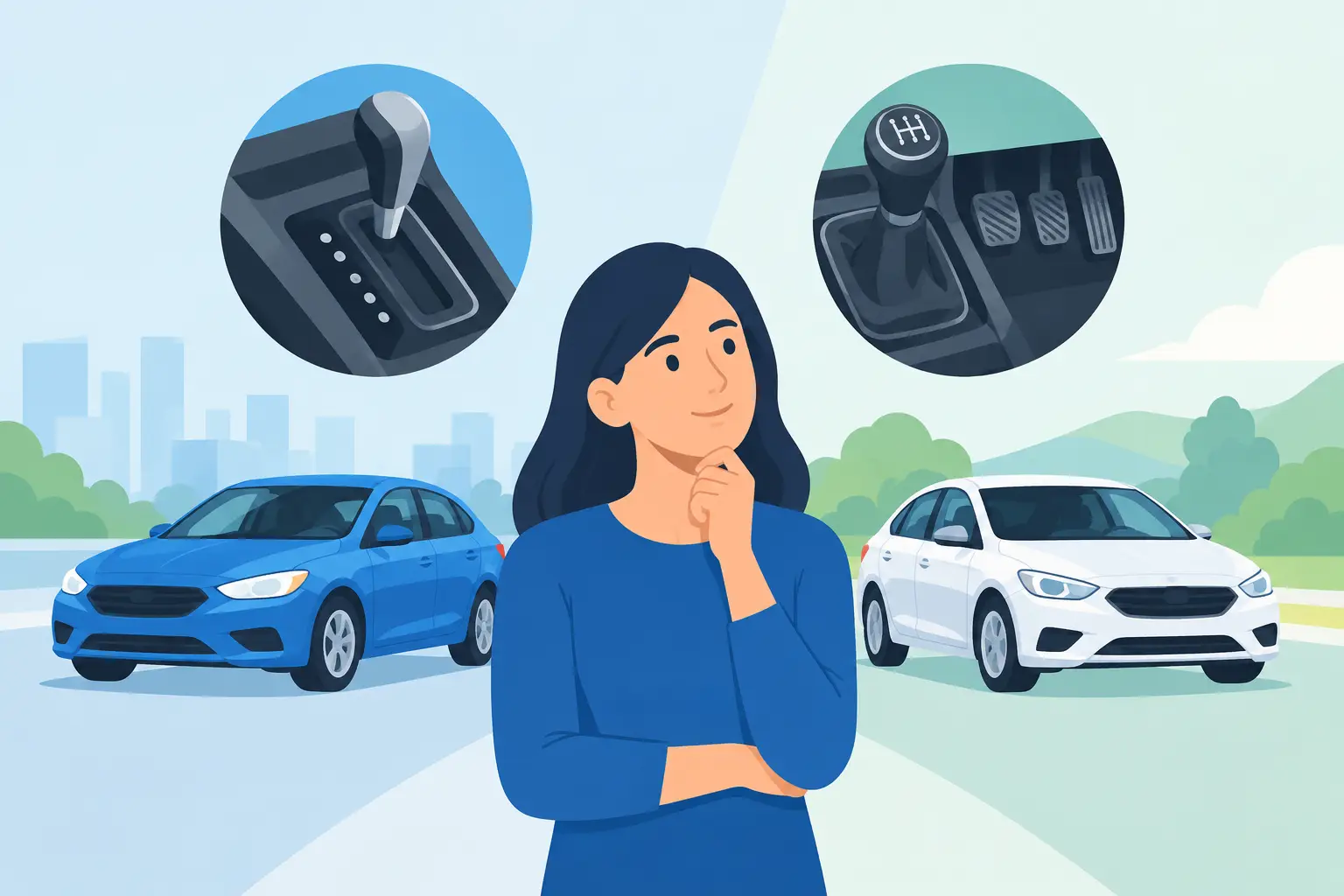
The first choice you make when learning to drive can shape how comfortable you feel behind the wheel: automatic vs manual driving lessons.
For some learners, changing gears feels like one task too many while learning to deal with busy junctions, roundabouts and traffic. For others, gaining a manual licence feels worth the additional practice.
Neither route is automatically better. The right choice depends on the car you expect to drive, the flexibility you want after passing and which option helps you develop into a safe, capable and confident driver.
Automatic vs manual driving lessons: the key difference
A manual car requires you to use a clutch pedal and select gears yourself. That means learning clutch control, finding the biting point, changing gear at appropriate times and coordinating all of this with steering, observation, speed and road position.
An automatic car has no clutch pedal for the driver to operate. Once you select the appropriate driving mode, the car handles gear changes automatically, allowing you to concentrate more directly on steering, speed, space, hazards and decision-making.
You will still need to develop the driving skills required to reach test standard, including effective observation, safe positioning, appropriate use of speed, manoeuvres and independent driving.
The transmission changes part of the workload. It does not change the standard of safe driving you need to achieve.
One of the biggest practical differences comes after you pass.
Passing your test in a manual car allows you to drive both manual and automatic cars covered by your licence. Passing in an automatic car gives you an automatic-only entitlement, so you cannot drive a manual car using that licence.
If your circumstances change later, you can take a practical driving test in a manual car to gain manual entitlement.
Why automatic lessons can feel easier at the start
Automatic driving lessons remove one of the more technical parts of learning to drive.
There is no clutch to balance in slow-moving traffic, no need to coordinate clutch and accelerator when moving away, and no manual gear changes to manage while approaching a junction or roundabout.
For some beginners, having fewer vehicle controls to coordinate can make the first few lessons feel less overwhelming.
This may be particularly useful if you are a nervous beginner, have previously struggled with coordinating several tasks at once, or simply feel more comfortable concentrating on what is happening around the car before adding more vehicle-control tasks.
Automatic cars can also be convenient in stop-start traffic. If much of your driving is likely to involve town journeys around Luton, St Albans, Stevenage or other busy areas, not having to repeatedly operate a clutch may make everyday driving more comfortable.
Some learners may progress more quickly in an automatic because they do not need to spend lesson time developing clutch control and manual gear changes. However, this does not mean there is a guaranteed number of hours you will save.
The number of driving lessons you need depends on factors such as your previous experience, lesson frequency, private practice, confidence and how consistently you can make safe decisions independently.
Automatic transmission can reduce the number of vehicle-control tasks you need to learn, but it does not remove the need to develop good judgement, observation and planning.
When manual driving lessons make more sense
Manual driving lessons provide greater flexibility once you pass because a manual licence allows you to drive both manual and automatic cars covered by your licence.
That flexibility can be useful if you expect to share a family car, borrow a manual vehicle, buy a used manual car or need to drive different vehicles for work.
There are additional skills to learn, particularly during the early stages.
Stalling while learning is normal. So is taking several attempts to move away smoothly, selecting the wrong gear or finding clutch control difficult at first.
A patient instructor should introduce these skills gradually and help you understand why something went wrong rather than expecting everything to work perfectly immediately.
With practice, clutch control and gear selection can become much more natural, allowing you to give more attention to the road ahead.
Some learners also enjoy the involvement of driving a manual car and having direct control over gear selection.
However, choose manual because the additional licence flexibility is useful to you — not because you feel pressured to take what someone else considers the more traditional or difficult route.
Think about the car you will drive after your test
The vehicle you are likely to drive after passing is one of the most useful things to consider when choosing between automatic and manual lessons.
If your household already has an automatic car, or you intend to buy an automatic, automatic lessons may be the straightforward choice. There may be little practical benefit in spending additional time learning manual vehicle controls if you do not expect to use them.
On the other hand, if the car available to you after passing is manual, learning and taking your test in a manual car avoids needing another practical test later before you can legally drive it.
Think about this before paying for a large lesson package rather than assuming a particular type of car will be available after you pass.
It is also reasonable to think about how the vehicle market is changing.
Electric cars do not use a traditional manual gearbox and clutch, and automatic transmissions are also available across many hybrid, petrol and diesel vehicles. This means an automatic-only licence can be practical for many drivers.
Manual cars are still widely used, however, particularly in the used-car market.
Your likely first car, budget, household arrangements, work requirements and future driving needs are therefore more useful considerations than trying to predict whether manual or automatic cars will eventually dominate the market.
Compare cost, availability and lesson planning
It can be tempting to compare automatic and manual lessons using only the hourly price.
That does not always tell you which option will cost less overall.
Lesson prices can vary according to the instructor, location, lesson duration and other factors. Instructor availability may also differ between manual and automatic tuition in your area.
A more useful question is what your overall route to becoming test-ready is likely to look like.
If learning in an automatic allows you to progress comfortably and consistently, paying a different hourly rate may still represent good value.
If having manual entitlement will be useful after passing, spending additional time developing clutch and gear skills may be worthwhile because it could avoid needing further training and another practical test later.
Regularity also matters whichever transmission you choose.
Consistent lessons generally make it easier to build on what you learned previously than repeatedly taking long gaps and having to regain confidence or revisit earlier skills.
Look for an instructor whose availability works with your college, work shifts, family responsibilities or other commitments.
Having clear bookings, lesson records and visible progress can also make the learning process easier to organise.
Is the driving test easier in an automatic?
A common question is whether taking the practical driving test in an automatic car makes the test easier.
You have fewer vehicle controls to manage, but you still need to demonstrate that you can drive safely and independently to the required standard.
You will still be assessed on important areas such as observation, judgement, positioning, appropriate use of speed, responding to hazards and making safe decisions.
The practical test also includes independent driving, and you may be asked to carry out one of the manoeuvres used as part of the test.
Using an automatic means you do not have to demonstrate manual clutch and gear control. For some learners, removing those tasks allows them to concentrate more fully on the road and demonstrate their driving ability more consistently.
But automatic transmission does not compensate for poor observation, unsafe decisions or inadequate planning.
Whichever transmission you choose, you need to demonstrate that you can drive safely without relying on your instructor to guide every decision.
Should I learn automatic or manual?
Start by thinking honestly about your priorities.
If you want the widest choice of vehicles after passing and are prepared to spend time developing clutch control and gear selection, manual driving lessons may be the better choice.
If you expect to drive an automatic car and would prefer to reduce the number of vehicle-control tasks you need to manage while learning, automatic lessons may suit you better.
Do not choose automatic simply because someone tells you manual will be too difficult.
Equally, do not choose manual because someone tells you that it is the only proper way to learn to drive.
Both routes require concentration, responsibility, observation, judgement and practice.
The better choice is the one that fits your circumstances and gives you the best opportunity to become a safe and confident driver.
Can you switch from manual to automatic lessons?
Yes. Choosing one transmission when you start learning does not necessarily mean you have to continue with it.
A learner who begins with manual lessons may decide after gaining some experience that automatic is a better fit. Skills such as observation, road positioning, hazard awareness and planning can still be valuable when changing transmission.
If you have already passed your test in an automatic, you can also learn to drive a manual car later. You would need to pass the appropriate practical test in a manual car before gaining manual entitlement.
Changing direction should not be seen as failing.
The purpose of learning to drive is to become a safe and independent driver, not to prove that one transmission is better than another.
Choose the option that works for you
A good driving instructor should discuss your goals rather than simply pushing you towards one transmission.
They should help you understand what your licence will allow you to drive, consider the vehicle you expect to use after passing and develop a lesson plan suited to your experience and confidence.
Your lessons should then progress from appropriate practice areas towards increasingly demanding situations, independent driving, manoeuvres and test preparation as your skills develop.
Real Drive helps learners compare verified local instructors, find suitable lesson availability and keep their learning progress visible from their first lesson through to test preparation.
When choosing between automatic and manual driving lessons, start with the car and licence that suit the life you expect to lead after passing.
Then give yourself the time, practice and support needed to become a confident, responsible and safe driver.
Keep learning