Driving Guide
Luton Test Routes: Prepare for Your Practical Test
Looking for Luton test routes? Learn why DVSA does not publish driving-test routes and how to practise local roads, roundabouts, junctions and independent driving effectively.
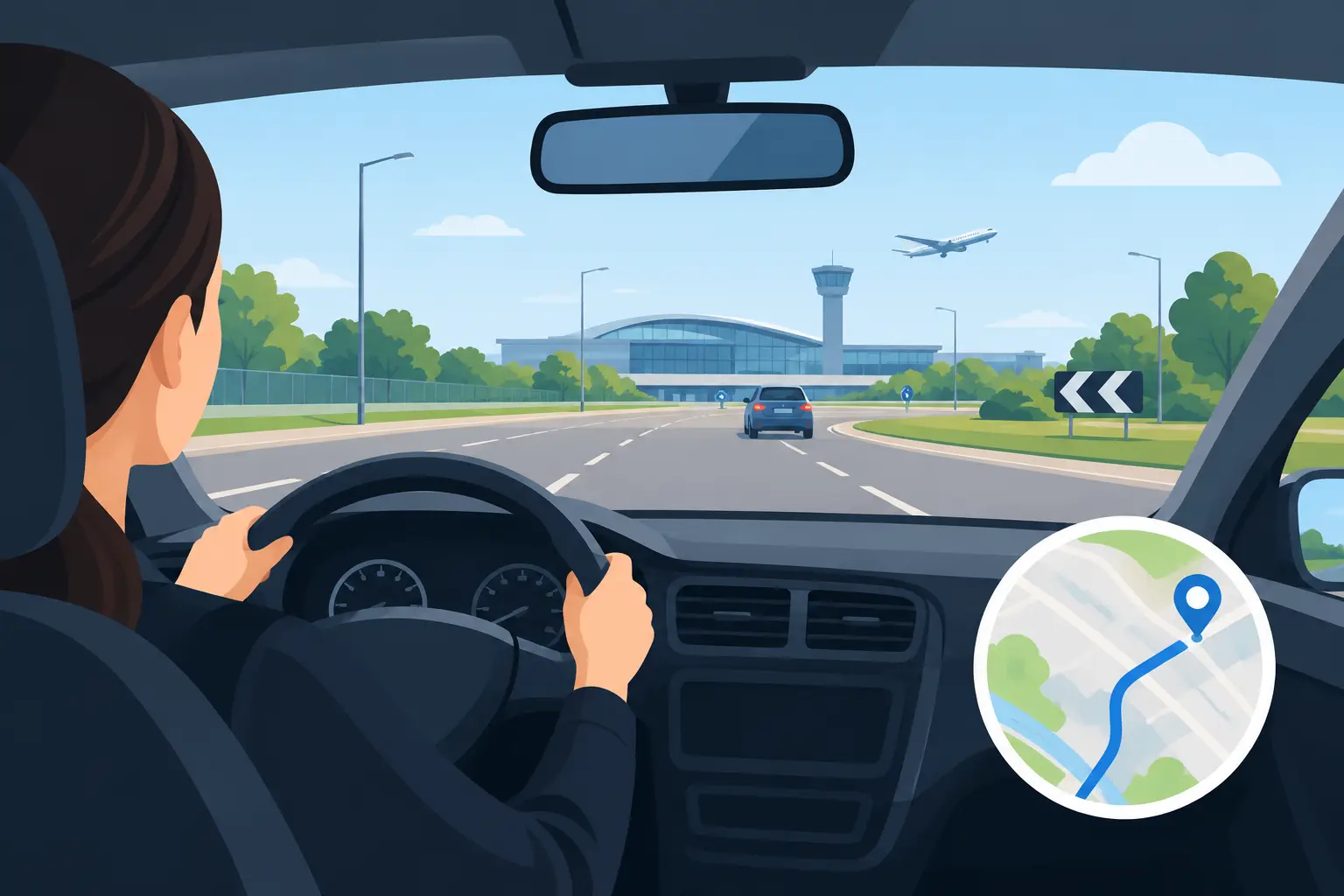
Searching for Luton test routes is understandable when your practical driving test is getting closer.
After spending time and money learning to drive, you may want to know which roads the examiner will use, which roundabouts might appear and whether you can practise the exact route beforehand.
But there is an important point to understand:
DVSA does not publish driving-test routes.
Instead of trying to memorise a particular journey, the better way to prepare is to become comfortable with the types of roads and driving situations you may encounter around Luton.
That means being able to deal safely with junctions, roundabouts, parked vehicles, changing speed limits, pedestrians, faster roads and unfamiliar directions without relying on knowing what comes next.
Local knowledge can help.
Route memorisation should not be the goal.
Are Luton driving test routes published?
No.
DVSA does not publish the routes used for practical car driving tests.
This means there is no official list of current Luton test routes that can tell you exactly where your examiner will take you.
You may find old routes, maps and videos online claiming to show Luton driving-test routes.
They can sometimes introduce you to local roads, but they should not be treated as the route you will receive on your test.
Road conditions change.
There may be:
- Roadworks.
- Temporary restrictions.
- Congestion.
- Closures.
- Changes to road layouts.
- Different traffic conditions.
Most importantly, your practical test is designed to assess whether you can drive safely in real road conditions rather than whether you can remember a sequence of turns.
Use local-route information to identify useful places and situations to practise.
Do not use it as a script for test day.
Why practising around Luton is still useful
Not knowing the test route does not mean local practice has no value.
Driving regularly around Luton can expose you to the types of decisions you may need to make independently.
Depending on where you drive, your lessons can give you experience of:
- Busy urban roads.
- Residential streets.
- Parked vehicles.
- Pedestrian crossings.
- Mini-roundabouts.
- Larger roundabouts.
- Multi-lane approaches.
- Traffic lights.
- Changing speed limits.
- Faster roads.
- Different junction layouts.
The value comes from learning how to deal with those situations rather than remembering what happens at one particular location.
For example, practising a complicated roundabout is useful if it teaches you to recognise signs, choose an appropriate lane, control your speed and respond to changing traffic.
Those skills can then be applied to another roundabout you have never seen before.
What happens during the practical driving test?
Your practical test involves driving in different road and traffic conditions.
You will need to demonstrate that you can control the vehicle and make safe decisions without relying on continuous help from an instructor.
The test includes general driving as well as independent driving.
You will also be asked to complete one reversing exercise.
This can be:
- Parallel parking at the side of the road.
- Parking in a bay, either driving in and reversing out or reversing in and driving out.
- Pulling up on the right, reversing for around two car lengths and rejoining traffic.
You might also be asked to carry out an emergency stop.
The particular roads and situations you encounter will depend on the test.
That is another reason practising only a memorised Luton route is not enough.
Independent driving is a major part of the test
Independent driving currently lasts around 20 to 35 minutes.
You will be asked to follow:
- Directions from a sat nav.
- Traffic signs.
- Or a combination of both.
The examiner will tell you which method to follow and will set up the sat nav when one is being used.
You cannot use your own sat nav for this part of the test.
Independent driving is particularly relevant when thinking about Luton test routes.
You are being assessed on your ability to continue driving safely while following directions.
You are not being tested on whether you know Luton from memory.
What if you go the wrong way?
Taking a wrong turn does not automatically result in a driving fault.
If you go the wrong way, continue driving safely.
The examiner can help you get back onto the route.
The problem occurs when a learner realises they are going the wrong way and tries to correct it unsafely.
For example, avoid:
- Making a sudden lane change.
- Steering sharply towards an exit.
- Ignoring road markings.
- Making an unsafe turn.
- Rushing because you think you have missed an instruction.
If you cannot safely take the requested direction, continue safely.
A wrong route is much less important than an unsafe decision.
What should you practise around Luton?
Instead of asking:
"Which exact roads will be on my Luton test?"
ask:
"Which driving situations do I still need to become more confident with?"
Your instructor can then use suitable local roads to develop those skills.
The following areas are particularly useful to include in your preparation.
Roundabouts and lane discipline
Roundabouts combine several driving skills at once.
You need to consider:
- Signs.
- Road markings.
- Lane choice.
- Mirrors.
- Speed.
- Positioning.
- Other traffic.
- When it is safe to proceed.
Larger or multi-lane roundabouts can feel difficult because you need to gather information early.
Do not wait until you reach the roundabout before trying to work out where you need to go.
Look ahead for signs and markings.
Plan your position early enough to avoid unnecessary last-second changes.
If you realise you are in the wrong lane, do not force your way into another lane simply to follow the intended direction.
Deal safely with the position you are in.
Your examiner can redirect you if necessary.
Mini-roundabouts
Mini-roundabouts can look less complicated than larger roundabouts, but they still require good observation and judgement.
Traffic can approach from several directions within a relatively small area.
Your view may also be affected by:
- Buildings.
- Parked vehicles.
- Other traffic.
- Road layout.
Approach at a speed that gives you enough time to assess the situation.
Avoid treating a familiar mini-roundabout as an automatic decision simply because you have driven through it many times during lessons.
Observe what is happening each time.
Meeting traffic on narrower roads
Residential roads can be useful for developing meeting-and-passing judgement.
Parked vehicles may reduce a road that normally carries two-way traffic to a space where only one vehicle can comfortably pass.
Look well ahead.
Try to identify:
- Oncoming vehicles.
- Available gaps.
- Parked vehicles.
- Pedestrians.
- Doors that might open.
- Vehicles preparing to move away.
Early observation gives you more choices.
You may be able to wait in a suitable gap rather than reaching the narrowest point at the same time as an approaching vehicle.
Do not rush simply because another vehicle is waiting.
Make a safe decision based on the road situation.
Parked vehicles and restricted views
Parked vehicles create more than a meeting-traffic problem.
They can also hide hazards.
A pedestrian may step between vehicles.
A car door may open.
A vehicle may begin moving away.
A side road may be partially hidden.
This is where good driving hazard perception becomes important.
Do not look only at the vehicle directly ahead.
Try to understand what may be happening beyond and around the parked vehicles as well.
Junctions
Junctions are another area where familiarity can sometimes create bad habits.
If you have used the same junction repeatedly during lessons, you may begin assuming that you already know what will happen.
Treat every approach as a new situation.
Consider:
- Your mirrors.
- Your speed.
- Your position.
- Road signs and markings.
- Pedestrians.
- Cyclists.
- Approaching traffic.
- Visibility.
If your view is restricted, respond to what you can actually see rather than relying on memory of the junction.
Knowing the road does not remove the need for observation.
Changing speed limits
When driving around an urban area, speed limits can change as the road environment changes.
Look for signs rather than relying on memory.
Your speed should also remain appropriate for the conditions.
The posted limit is a maximum, not a target that must be maintained regardless of what is happening around you.
You may need a lower speed because of:
- Traffic.
- Pedestrians.
- Restricted visibility.
- Parked vehicles.
- Weather.
- Road layout.
A learner who understands the road environment is better prepared than one who simply remembers that a particular road "is a 30".
Faster roads
Your test can include different road and traffic conditions, although the car driving test does not take place on motorways.
Depending on the route and local conditions, you may encounter faster roads or dual carriageways.
Make sure you are comfortable with:
- Joining traffic appropriately.
- Building speed safely.
- Maintaining suitable following distance.
- Reading signs.
- Choosing lanes.
- Changing lanes safely.
- Planning well ahead.
- Leaving the road appropriately.
If faster roads make you nervous, practise them during lessons rather than hoping they will not appear during the test.
Pedestrian crossings
Busy areas can involve different types of pedestrian crossings and situations where people may cross unexpectedly.
Look beyond the crossing itself.
Consider:
- People approaching it.
- Pedestrians waiting nearby.
- Children.
- Cyclists.
- Vehicles obscuring your view.
- Traffic slowing ahead.
Early recognition allows you to respond smoothly instead of braking late.
Traffic lights and busy junctions
At traffic lights, avoid concentrating only on the signal.
You still need awareness of:
- Your mirrors.
- Lane markings.
- Pedestrians.
- Cyclists.
- Traffic beside you.
- The road beyond the junction.
When the light changes, do not treat it as an instruction to move regardless of the situation.
Make sure it is appropriate and safe to proceed.
Do not practise only familiar roads
Local experience is useful.
Over-familiarity can be a problem.
If every lesson follows the same roads, you may become good at remembering what happens next without developing the same level of independent planning.
Ask your instructor to vary the routes.
Practise:
- Unfamiliar junctions.
- Different roundabouts.
- Different parking locations.
- Alternative routes.
- Sat-nav driving.
- Following traffic signs.
This gives you opportunities to apply what you have learned without knowing the road in advance.
That is much closer to the skill you need after passing your test.
Practise at different times of day
The same road can require different decisions depending on when you use it.
A road that feels straightforward during a quiet lesson may look very different during heavier traffic.
Where appropriate, gaining experience at different times can expose you to:
- Commuter traffic.
- School traffic.
- Buses.
- More pedestrians.
- Different parking patterns.
- Changing traffic flow.
You do not need to deliberately seek the most difficult possible conditions.
The objective is to gradually build experience of realistic driving environments.
Practise the manoeuvres, not one manoeuvre location
Do not learn a manoeuvre by memorising one particular place.
For the practical test, you may be asked to complete one reversing exercise.
Prepare for the different possibilities by developing the underlying skills:
- Low-speed control.
- Effective observation.
- Accurate positioning.
- Judgement.
- Safe correction where necessary.
For example, if you are practising bay parking, use different suitable bays and car parks rather than always starting from exactly the same position.
Our guide to mastering bay parking explains how to develop the method rather than relying entirely on fixed reference points.
Manual and automatic learners need the same road awareness
Whether you learn in a manual or automatic car, you need the same fundamental road skills.
You still need to:
- Observe effectively.
- Recognise hazards.
- Plan ahead.
- Position correctly.
- Choose appropriate speeds.
- Make safe decisions.
Manual learners also need to coordinate clutch and gear control.
If you are developing those skills, see our guide to learning to drive manual.
Automatic tuition removes manual clutch and gear operation, which some learners prefer.
Our guide to automatic driving lessons explains what to consider before choosing.
Neither transmission removes the need to become an independent and observant driver.
Use mock tests properly
Mock tests can be useful as your driving becomes more independent.
The objective is not to discover whether you can pass one particular memorised route.
A useful mock test reduces normal instructor support and gives you an opportunity to demonstrate how you manage:
- Unfamiliar directions.
- Junctions.
- Roundabouts.
- Independent driving.
- Different traffic situations.
- A manoeuvre.
- Decisions without continuous prompting.
The result should then guide your remaining lessons.
Instead of simply saying:
"I failed the mock."
identify the patterns behind the faults.
Perhaps you:
- Approach junctions too quickly.
- Recognise speed-limit changes late.
- Miss mirror checks before changing position.
- Hesitate because observations are happening too late.
- Need too much help choosing lanes.
Those are much more useful targets for your next lesson.
Do not chase a test route when your driving still needs work
A test date can create urgency.
That sometimes leads learners to spend their final lessons repeatedly driving roads they believe are likely to appear on the test.
But familiarity with a route cannot compensate for inconsistent driving skills.
If you still need significant help with observations, speed, positioning or decision-making, concentrate on those areas.
Your goal should be to reach a point where you can drive safely when your instructor does not tell you what to do next.
A driving lesson progress tracker can help you identify which skills are becoming independent and which still need attention.
A useful plan for the weeks before your Luton driving test
As your test approaches, make your lessons more focused.
Start by identifying recurring weaknesses.
For example:
If roundabouts are difficult:
Work on signs, lane planning, speed and observations across several different roundabouts.
If meeting traffic is difficult:
Practise recognising situations earlier and identifying suitable places to wait.
If independent driving is difficult:
Spend more time following sat-nav directions and traffic signs without unnecessary instructor prompts.
If manoeuvres are inconsistent:
Practise them in different suitable locations.
If nerves affect your decisions:
Use mock-test conditions gradually rather than turning every lesson into a mock test.
The closer you become to test standard, the more independently you should be able to manage these situations.
Prepare for the practical details too
Driving ability is the main preparation, but do not overlook the practical arrangements.
Before test day, make sure you know:
- When your test is.
- Where you need to meet.
- What you need to bring.
- Which vehicle you will use.
- Whether your instructor's car is confirmed for the test.
- How you will get to the test centre.
If you are using your instructor's car, discuss the arrangements in advance rather than assuming it will automatically be available.
Our guide to preparing for your DVSA driving test covers the test-day requirements and preparation in more detail.
What should you do the night before?
The night before your test is not the time to try to memorise every road around Luton.
You do not need to watch hours of old route videos.
You do not need to learn every roundabout from a map.
Instead, make sure the practical arrangements are ready and give yourself an opportunity to rest.
You can briefly remind yourself of the principles you have been practising:
- Look ahead.
- Read signs and markings early.
- Use mirrors appropriately.
- Choose an appropriate speed.
- Maintain suitable positioning.
- Keep observing at junctions.
- Leave enough space.
- Make safe decisions rather than rushed ones.
Those principles work regardless of which direction the examiner asks you to take.
What if roadworks change the route?
Treat roadworks as another normal driving situation.
Follow the signs, temporary restrictions and directions that apply.
Do not worry that the examiner has taken you somewhere you did not practise.
The practical test is designed to assess your ability to respond to real driving conditions.
The same applies if:
- A road is closed.
- Traffic is unusually heavy.
- A bus blocks your view.
- Another vehicle behaves unexpectedly.
- You cannot take an expected turn.
Respond to what is actually happening rather than what you expected to happen.
How Real Drive can help learners in Luton
Real Drive helps learners find and compare driving instructors and organise their learning more clearly.
If you are looking for driving lessons in Luton, you can explore suitable instructors and lesson options for your area.
As your test approaches, keeping lessons, availability and progress organised can make it easier to concentrate on the skills that still need attention.
Your instructor can then use local roads to develop those skills without turning every lesson into an attempt to reproduce a supposed test route.
Luton test routes: what should you actually learn?
You cannot know exactly which roads your examiner will use.
That is not a disadvantage if you are properly prepared.
Learn the types of situations, not the sequence of turns.
Become comfortable dealing with:
- Roundabouts.
- Junctions.
- Parked vehicles.
- Meeting traffic.
- Pedestrians.
- Changing speed limits.
- Faster roads.
- Independent directions.
- Manoeuvres.
- Unfamiliar situations.
Local practice around Luton can make those environments more familiar.
But your real preparation is developing the ability to apply the same safe driving principles wherever the examiner takes you.
A practical test is not a memory test.
If you miss a turn, continue safely.
If traffic changes, adapt.
If the road is unfamiliar, read what is in front of you.
The strongest preparation for any Luton test route is reaching the point where you no longer need to know the route in advance.
Keep learning