Driving Guide
How to Check a Driving Instructor Licence
Learn how to check a driving instructor licence, understand green ADI and pink trainee badges, and know what to look for before paying for driving lessons.
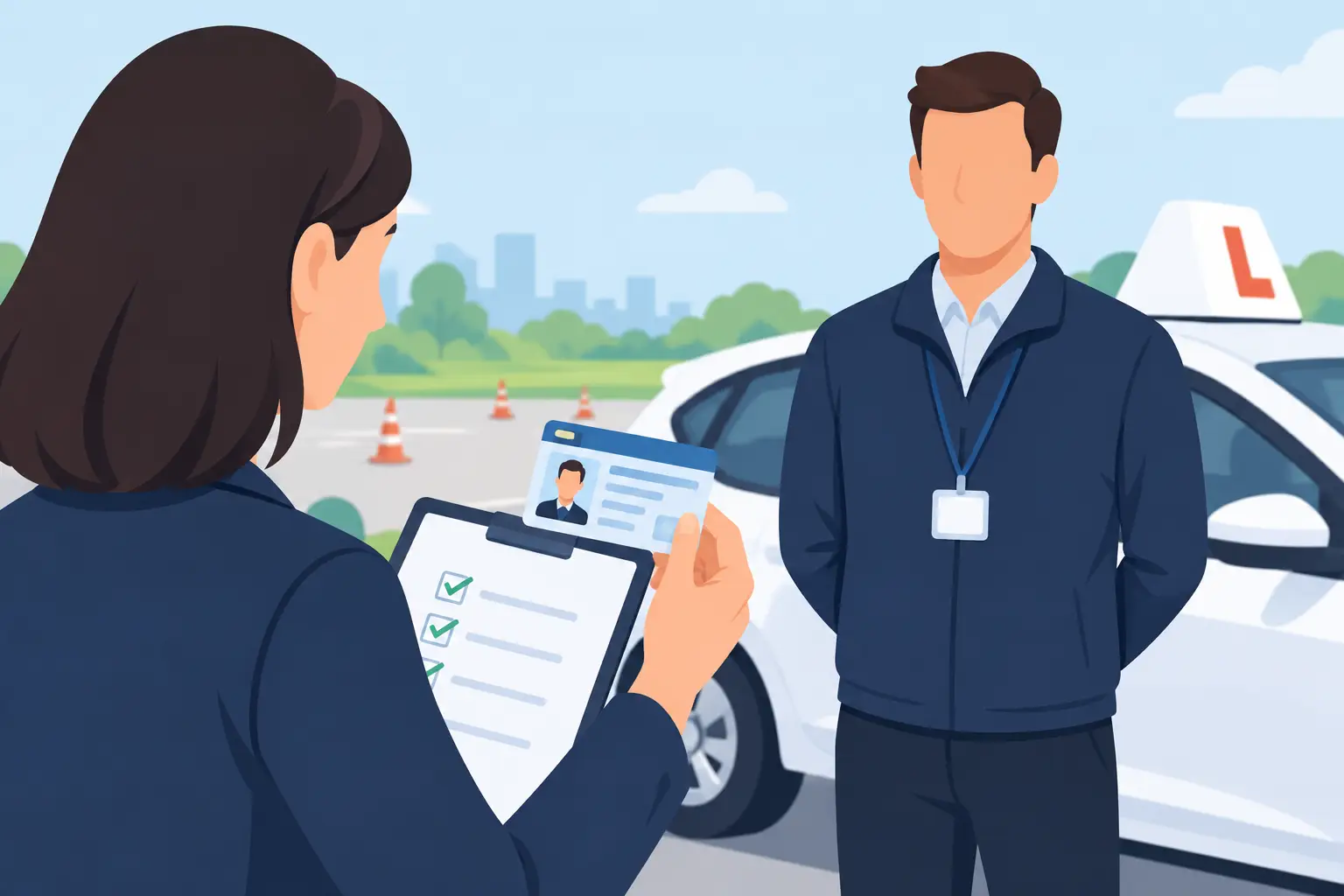
Booking your first driving lesson should feel exciting, not uncertain. Knowing how to check a driving instructor licence gives you a straightforward way to understand whether the person you are paying to teach you is properly registered.
In Great Britain, anyone you pay to teach you to drive a car must be either a qualified Approved Driving Instructor (ADI) or a licensed trainee driving instructor. Both must display the appropriate DVSA badge in the windscreen while giving paid lessons.
Checking that badge takes only a moment and is a sensible step before you begin learning.
Who can legally charge for driving lessons?
Paid car-driving instruction in Great Britain is regulated by the Driver and Vehicle Standards Agency (DVSA).
Someone charging you for lessons must be either:
- A qualified Approved Driving Instructor (ADI), who displays a green badge.
- A licensed trainee driving instructor, who displays a pink badge.
A qualified ADI has completed the DVSA qualification process and registered as an approved driving instructor.
A trainee driving instructor has not yet completed the full ADI qualification process but can legally charge for lessons while holding a valid trainee licence.
The distinction is important, but being a trainee does not mean someone is teaching illegally. The important question is whether they have the appropriate valid status and are open with you about it.
How to check a driving instructor licence
The simplest check happens when you meet the instructor.
Look at the passenger-side area of the front windscreen for their DVSA badge.
A green badge means the person is a qualified Approved Driving Instructor.
A pink badge means they are a licensed trainee driving instructor.
DVSA requires instructors to display the appropriate badge in the windscreen while giving paid driving lessons.
If you cannot see one, ask the instructor about it.
A professional instructor should be comfortable explaining whether they are fully qualified or a trainee and showing you the appropriate registration or trainee licence.
Do not rely only on claims such as “DVSA approved” in an advertisement or social-media profile. The badge displayed in the tuition vehicle gives you a direct way to check the instructor's current status when you meet them.
If you want to understand the wider checks to make before choosing someone, read our guide to verifying a driving instructor before booking.
What does a green driving instructor badge mean?
A green badge identifies a qualified Approved Driving Instructor.
An ADI has completed the DVSA qualification process and is registered to provide paid driving instruction.
ADI registration is not permanent.
Approved instructors must renew their registration every four years, and the renewal process includes obtaining a new criminal-record check. DVSA can also require ADIs to take standards checks to assess whether their instruction meets the required standard.
The green badge therefore represents a regulated professional status rather than simply evidence that someone once completed instructor training.
What does a pink driving instructor badge mean?
A pink badge identifies a trainee driving instructor who has been granted a DVSA trainee licence.
A trainee licence allows someone who is progressing through the ADI qualification process to gain practical experience teaching learners and charge for lessons while the licence remains valid.
Before someone can apply for a trainee licence, they must have passed the ADI Part 1 theory test and Part 2 driving-ability test and completed the required instructor training.
A trainee licence normally lasts six months.
Trainees must also follow specific DVSA training requirements while using the licence. Depending on the option chosen when applying, this involves either supervision for a proportion of the lessons they give or completing additional training.
A trainee instructor must not advertise themselves in a way that suggests they are already a fully qualified ADI.
This means seeing a pink badge is not automatically a reason to avoid an instructor. It tells you that they are still completing the qualification process while gaining teaching experience.
You can then decide whether their experience, availability and teaching approach suit you.
Green badge vs pink badge
The main distinction is qualification status.
A green badge means the instructor is a fully qualified and registered ADI.
A pink badge means the instructor is still training but currently holds a DVSA licence that allows them to provide paid lessons.
Both can legally charge for lessons while their respective registration or licence is valid.
Your decision does not need to be based on badge colour alone.
Some learners may prefer an experienced ADI. Others may find that a trainee instructor has excellent availability, communicates well and provides lessons that suit the way they learn.
What matters is that you understand who is teaching you and can make that choice with accurate information.
Can you check a driving instructor online?
DVSA provides official services relating to approved driving instructors, but there is an important limitation to understand.
An ADI can choose whether to publish their details through the government's instructor-finding service. This means absence from a public search result should not automatically be treated as proof that someone is not registered.
For that reason, checking the badge displayed in the tuition vehicle remains particularly useful.
If you are uncertain about an instructor's status, use current GOV.UK information rather than relying on an old directory, social-media post or screenshot.
Government services and processes can change, so official DVSA guidance should be your reference point when there is any doubt.
What else should you check before booking?
Confirming the instructor's registration tells you whether they are operating through the recognised DVSA system.
It does not tell you whether they are the right instructor for you.
Before paying for a large block of lessons, also consider their teaching style, reliability, lesson availability and booking terms.
Ask whether they teach manual or automatic and make sure the vehicle matches the licence route you want.
If you are considering automatic driving lessons, remember that passing your test in an automatic affects the vehicles your licence allows you to drive.
Ask how the instructor tracks progress too.
You should have some understanding of what you are developing and what needs more practice as you progress from basic vehicle control towards busier roads, independent driving, manoeuvres and test preparation.
Also check lesson length, prices, cancellation terms and payment arrangements before committing to a package.
Warning signs to take seriously
Most professional instructors will have no problem explaining their status.
Be more cautious if someone charging for lessons:
- Refuses to say whether they are qualified or a trainee.
- Does not display the appropriate green or pink badge while giving paid lessons.
- Claims that DVSA registration is unnecessary.
- Uses someone else's badge or registration details.
- Claims to be fully qualified when they are actually teaching under a trainee licence.
- Pressures you to make a large payment without clear lesson or cancellation terms.
A missing badge does not require an argument at the roadside.
Ask the instructor for clarification. If you are not satisfied that they are properly authorised to provide paid instruction, do not feel pressured to continue with the lesson or make further payments.
What if you think someone is teaching illegally?
It is illegal for someone to charge for car-driving lessons if they are neither a qualified and registered ADI nor a licensed trainee driving instructor.
DVSA provides a process for reporting suspected illegal driving instructors.
If you have genuine concerns, keep useful information such as the person's name, vehicle registration, driving-school name and details of what happened.
You can then use the official DVSA reporting process rather than confronting the person yourself.
Licence verification is only the first step
Checking a driving instructor's licence should be quick.
Look for the appropriate green ADI badge or pink trainee badge, make sure the instructor is clear about their status, and use current DVSA information if something does not seem right.
After that, concentrate on whether the instructor is right for the way you learn.
A suitable instructor should combine legitimate instructor status with clear communication, reliable availability, transparent terms and teaching that helps you become increasingly safe and independent.
Real Drive helps learners compare verified local instructors, review lesson options and manage bookings in one place.
Whether you are learning in Luton or elsewhere, taking a moment to check who will be sitting beside you is a sensible first step towards learning with confidence.
Keep learning