Driving Guide
How to Verify a Driving Instructor Before Booking
Learn how to verify a driving instructor before booking, from checking their ADI or trainee status to reviewing lesson terms, prices, teaching style and common warning signs.
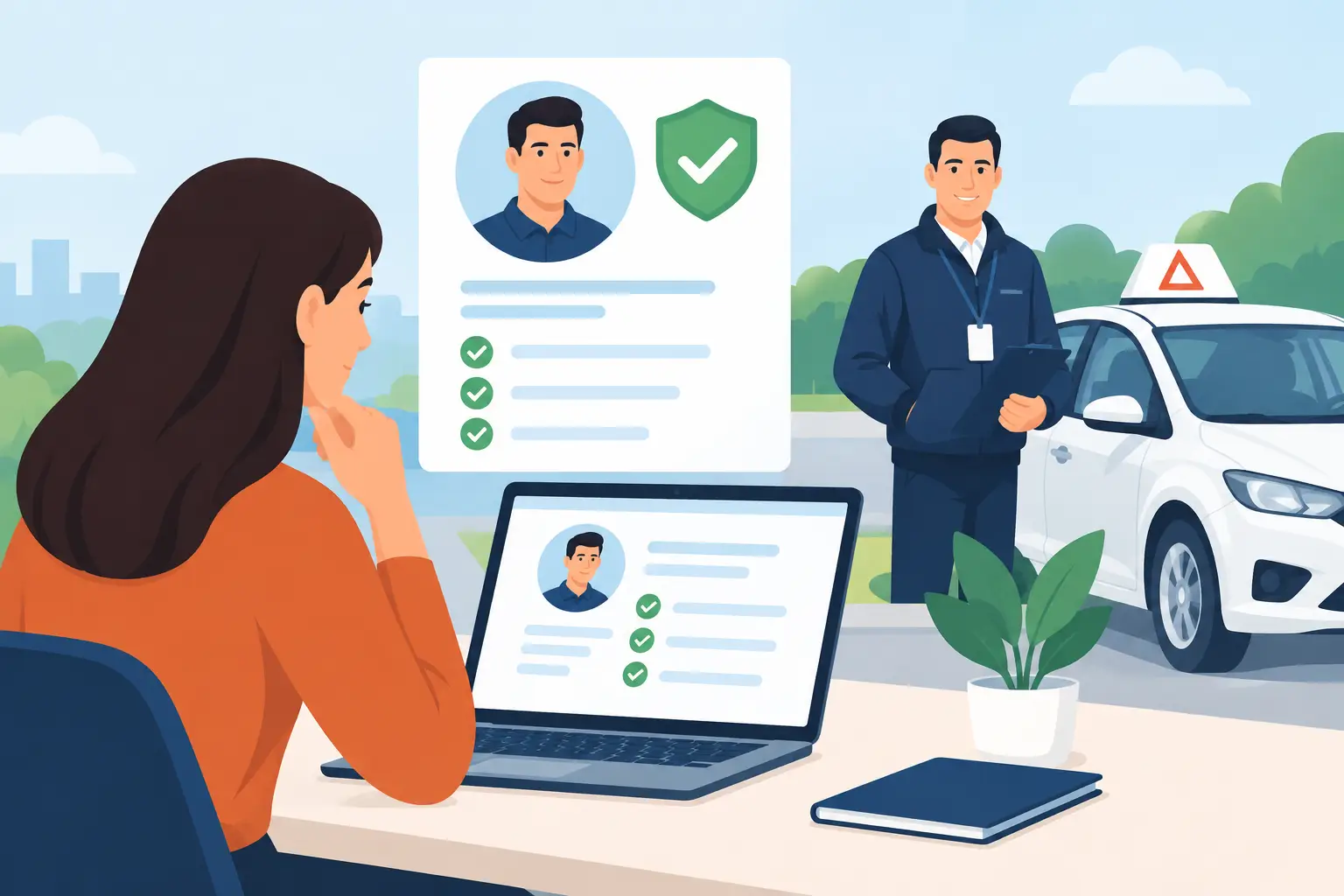
A driving instructor will sit beside you while you build skills that affect your safety, confidence and practical test result. That is why knowing how to verify a driving instructor before paying for a block of lessons is more than a quick online check. You need to know they are properly registered, suitably insured and a good fit for the way you learn.
In Luton and the surrounding towns, availability can make it tempting to book the first instructor who has a free evening slot. A little checking first can save you from unclear pricing, unsuitable lesson plans and the disruption of changing instructors halfway through learning.
Start with DVSA registration
For paid driving lessons in Great Britain, the person teaching you must be either a qualified Approved Driving Instructor (ADI) or a trainee driving instructor licensed by the Driver and Vehicle Standards Agency (DVSA).
A fully qualified ADI displays a green badge in the windscreen of their tuition car. This shows that they are registered with the DVSA as an approved driving instructor.
Ask to see the badge when you meet your instructor. It should be displayed in the windscreen while they are giving paid driving lessons.
You may instead see a pink badge. This means the person is a trainee driving instructor. A trainee licence allows someone who is working towards full ADI qualification to gain teaching experience and charge for lessons while their licence is valid.
Choosing a trainee instructor is not automatically a disadvantage. Some learners may value the enthusiasm, availability and developing coaching skills a trainee can offer. However, they have not yet completed the full ADI qualification process, so it is reasonable to ask about their experience, training and supervision.
Be cautious if someone charging you for driving lessons avoids straightforward questions about their registration, cannot explain whether they are an ADI or trainee instructor, or does not display the appropriate badge.
How to verify a driving instructor beyond their badge
DVSA registration is the starting point, not the whole decision. The right instructor also needs the right vehicle, teaching approach and lesson structure for you.
First, confirm that the car is properly insured for driving tuition and ask whether it is fitted with dual controls.
Dual controls give the instructor an additional way to intervene when necessary. They can be particularly reassuring for beginners and during early lessons involving busy junctions, roundabouts or town-centre traffic. A professional instructor should be comfortable explaining the safety features of their tuition vehicle.
Next, ask whether the car is manual or automatic. It sounds obvious, but transmission type affects both the way you learn and the type of vehicles you will be entitled to drive after passing.
Passing your test in a manual car gives you entitlement to drive both manual and automatic cars, while passing in an automatic car restricts you to automatic vehicles unless you later pass a manual test.
Neither route is universally better. Automatic lessons can allow some learners to concentrate sooner on observation, planning and decision-making without having to manage clutch control and gear changes. Manual lessons may suit learners who want the wider licence entitlement and are comfortable learning clutch and gear control.
It is also useful to understand that becoming and remaining a registered driving instructor involves criminal-record checks. Approved driving instructors must obtain a new criminal-record check when renewing their ADI registration, which normally takes place every four years.
Rather than treating a DBS certificate as the only measure of whether someone is suitable, consider it as part of the wider DVSA registration and professional standards process.
Check what lessons will actually look like
A registered instructor can still be a poor match if their lessons feel rushed, vague or inflexible. Before committing to a large package, find out how they plan lessons and monitor your progress.
A useful instructor should be able to explain how a first lesson works.
For a complete beginner, that could mean checking your licence and eyesight, introducing the cockpit drill and controls, then working on skills such as moving off and stopping safely on a route appropriate for your experience.
For someone who has already had lessons, the instructor should establish what you can already do and identify the areas that need development rather than automatically starting again from the beginning.
Ask how they record progress between lessons. Do they set clear goals? Will you know which skills need more practice before you move towards independent driving, manoeuvres and mock tests?
Learning to drive is rarely a straight line. A clear progress record helps you understand why another lesson focusing on meeting traffic, observations or approach speed may be more useful than simply driving around test routes.
You should also ask how feedback is given.
Direct feedback is valuable, but it should be calm, specific and respectful. You need an instructor who can help you recognise mistakes, understand the risks involved and work out how to improve.
If you consistently feel pressured, belittled or unable to ask questions during lessons, changing instructor early may be better than hoping the relationship improves later.
Look for transparent prices and booking terms
A low hourly price is not always the lowest-cost option.
Compare what is actually included: lesson duration, pick-up area, evening or weekend availability, cancellation notice, payment method and whether the price changes after introductory lessons.
Before paying for a large block of lessons, establish what happens if work shifts, university timetables, family commitments or illness mean you need to move a booking.
You should know the cancellation policy and understand what happens to unused lessons if you decide to stop learning with that instructor.
This can be particularly important for working professionals and students whose schedules change regularly.
Secure, visible bookings can also reduce misunderstandings. A central booking system allows you to see upcoming lessons, manage bookings and keep a clearer record of your learning.
Real Drive is designed to give learners that clearer route: compare verified local instructors, find suitable availability, book lessons online and keep track of learning progress as your driving develops.
Be particularly careful with anyone who insists on cash only, demands a large payment without clear terms or claims they can privately secure or sell you a practical car driving test appointment.
Since 12 May 2026, learner drivers must book and manage their own car driving tests. Driving instructors and third-party services are not allowed to book a car test on a learner's behalf.
Your instructor can still help you decide whether you are ready for the test and provide their instructor reference number so that their availability can be checked when you make your booking, but the booking itself must be made by you through the official service.
Use reviews carefully, then speak to the instructor
Reviews can reveal patterns that a profile cannot.
Look for detailed comments about punctuality, clear explanations, calm teaching, reliability and communication.
A single negative review is not necessarily a concern, especially if it relates to an isolated issue. Repeated reports of cancelled lessons, unexpected fees, poor communication or unreliable behaviour deserve more attention.
Do not rely on star ratings alone.
An instructor with fewer reviews may simply be newly qualified, recently available in your area or building their business, while a highly established instructor may have limited availability.
Use reviews to create questions, then speak to the instructor directly.
A short conversation can tell you a lot. Explain where you are starting from, whether you want manual or automatic tuition, the times you can learn and any concerns you have.
For example, if you are nervous after a previous lesson, need lessons around a shift pattern or want to prepare for a test in Bedford, St Albans or Watford, say so.
A suitable instructor should respond realistically rather than promise that you will be test-ready on a particular date before they have assessed your driving.
Red flags worth acting on
Trust your judgement if something feels disorganised or evasive. Warning signs can include:
- No visible green ADI badge or pink trainee badge when giving paid lessons, with no reasonable explanation.
- Unclear answers about their DVSA registration or instructor status.
- Pressure to pay for a large package before you have had an opportunity to assess whether the instructor is right for you.
- Vague prices, changing terms or no clear cancellation policy.
- Promises of a guaranteed pass or a fixed number of lessons before assessing your driving.
- Claims that they can privately sell or secure a car driving test appointment for you.
- Frequent unanswered messages, repeated late arrivals or cancelled lessons before you have even properly started.
The number of lessons you need depends on your previous experience, how frequently you learn and practise, the range of roads and situations you experience, and how quickly you become consistently safe and independent.
Anyone promising an exact number of lessons before seeing you drive is simplifying a process that varies considerably from learner to learner.
Book an initial lesson with a clear purpose
An initial lesson is your opportunity to check the practical details: the car, the instructor's communication, punctuality, teaching style and whether the lesson has a sensible structure.
It is not only an assessment of your driving. You are also assessing whether this person is the right instructor to support you through an important learning goal.
Afterwards, ask yourself a few simple questions.
Did you understand the feedback you received? Did you feel comfortable asking questions? Did the instructor adapt the lesson to your ability? Do you understand what you need to work on next?
If the answer is yes, you can book further lessons with more confidence.
A good driving instructor does more than prepare you for a practical test. They help you develop the observation, planning, judgement and decision-making skills you will need to drive safely and independently long after the L-plates come off.
Keep learning